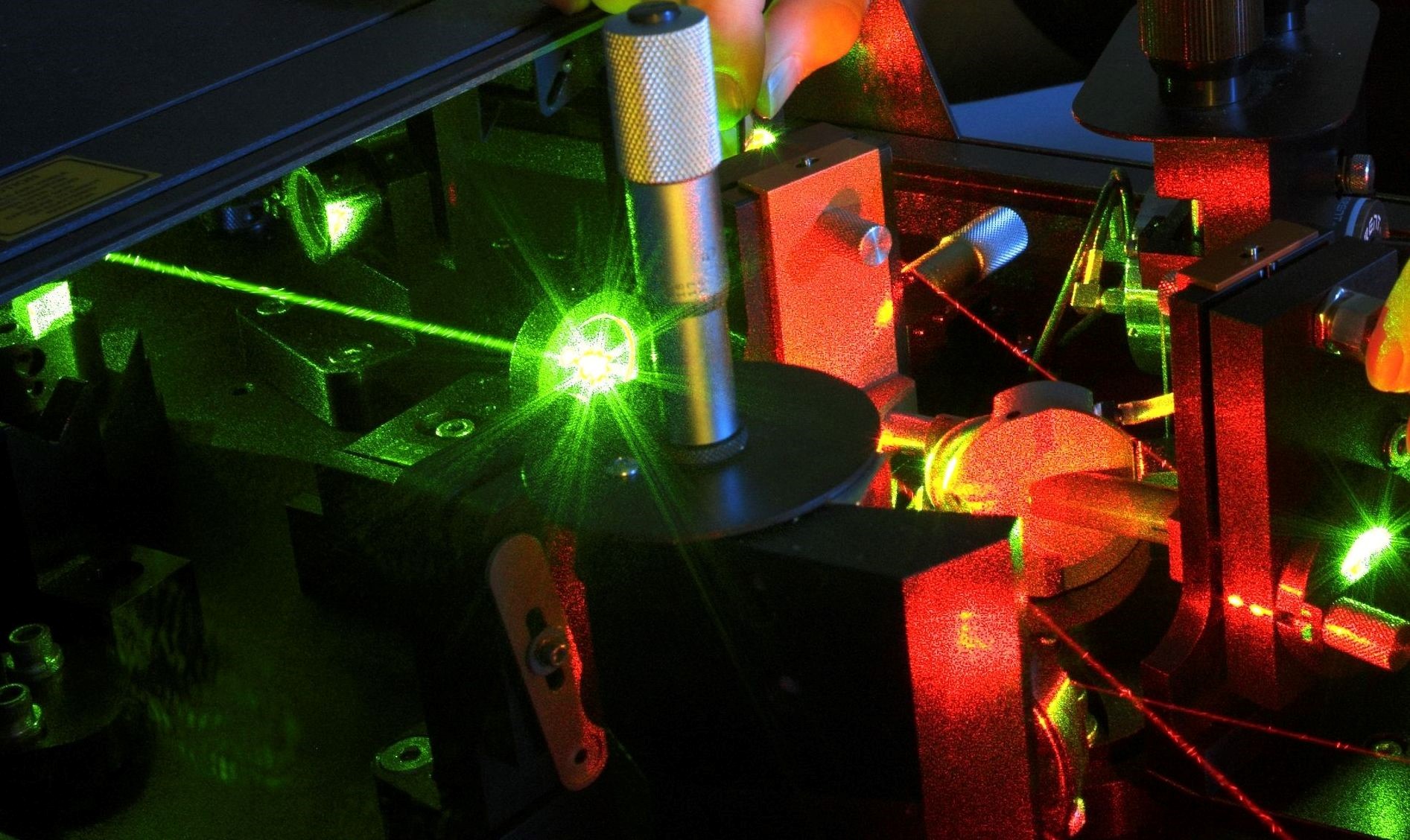
Once again this year, the Nobel Prize in Physics has been awarded to scientists whose research focuses on light. The prize recognises advances in the field of laser research and the practical application of laser light as a groundbreaking achievement for our society.
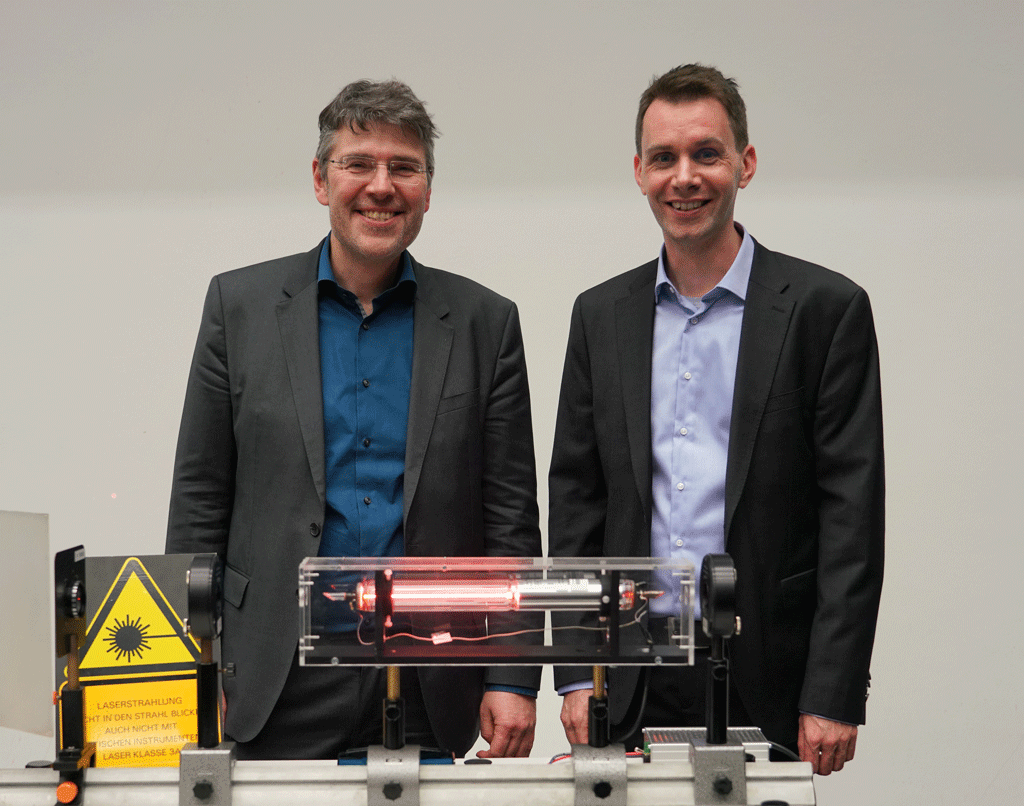
On 10 December, the day the Nobel Prizes were awarded in Stockholm, two scientists from the Faculties of Science and Mechanical Engineering at Paderborn University – Prof. Dr Thomas Zentgraf (Centre for Optoelectronics and Photonics Paderborn, CeOPP) and Prof. Dr.-Ing. Hans-Joachim Schmid (Direct Manufacturing Research Centre, DMRC), explained the significance of the research findings of this year’s three Nobel laureates, whilst also highlighting how laser light has found its way into applications in our everyday lives. Many people are familiar with lasers from science fiction and action films, where they create spectacular effects. “Although it is not yet possible to build a laser sword like the ones in the Star Trek films, lasers make many of our tasks easier today, particularly in materials processing and measurement technology,” explains Prof. Zentgraf.
Information about the laureates, the physical principles behind their inventions and their significance for our society was presented to the interested public. The evening lecture took place on 10 December 2018 at 6 pm in Lecture Theatre L2 on the Paderborn University campus.
Half of the 2018 Nobel Prize in Physics was awarded to the physicist Arthur Ashkin “for the development of optical tweezers and their application in biology”, and the other half was jointly awarded to Gérard Mourou and Donna Strickland “for the development of a method for generating high-energy, ultrashort optical pulses”.