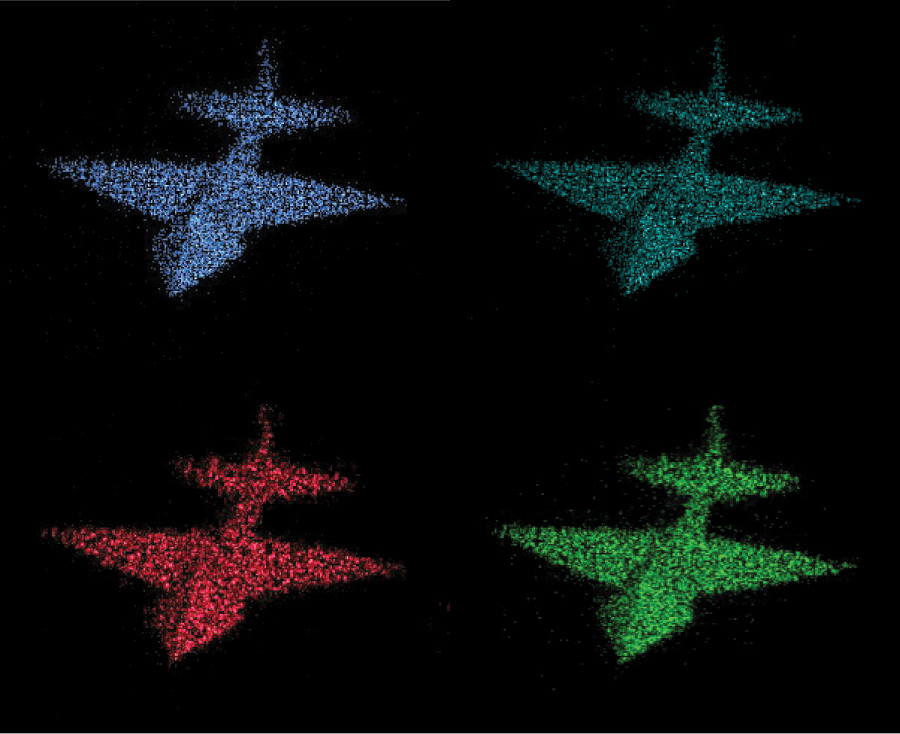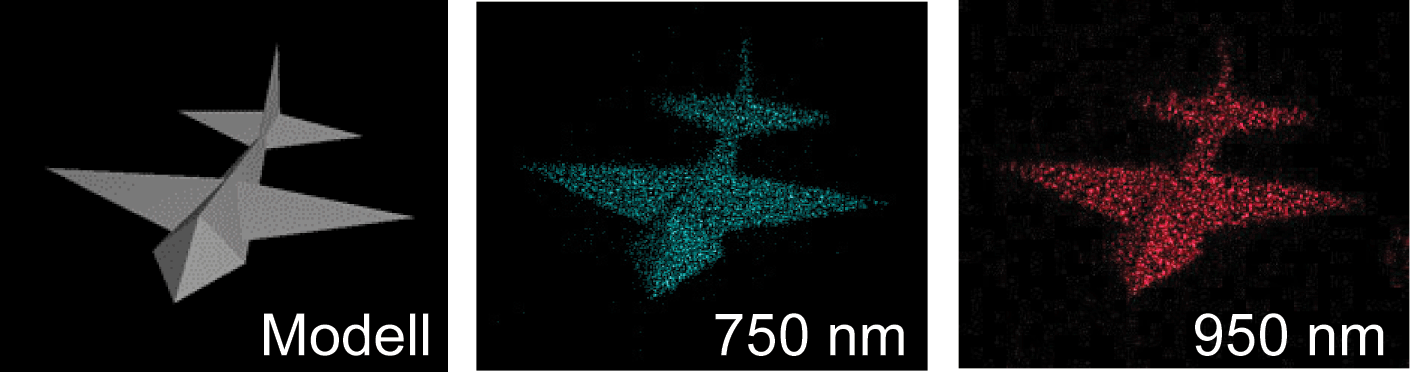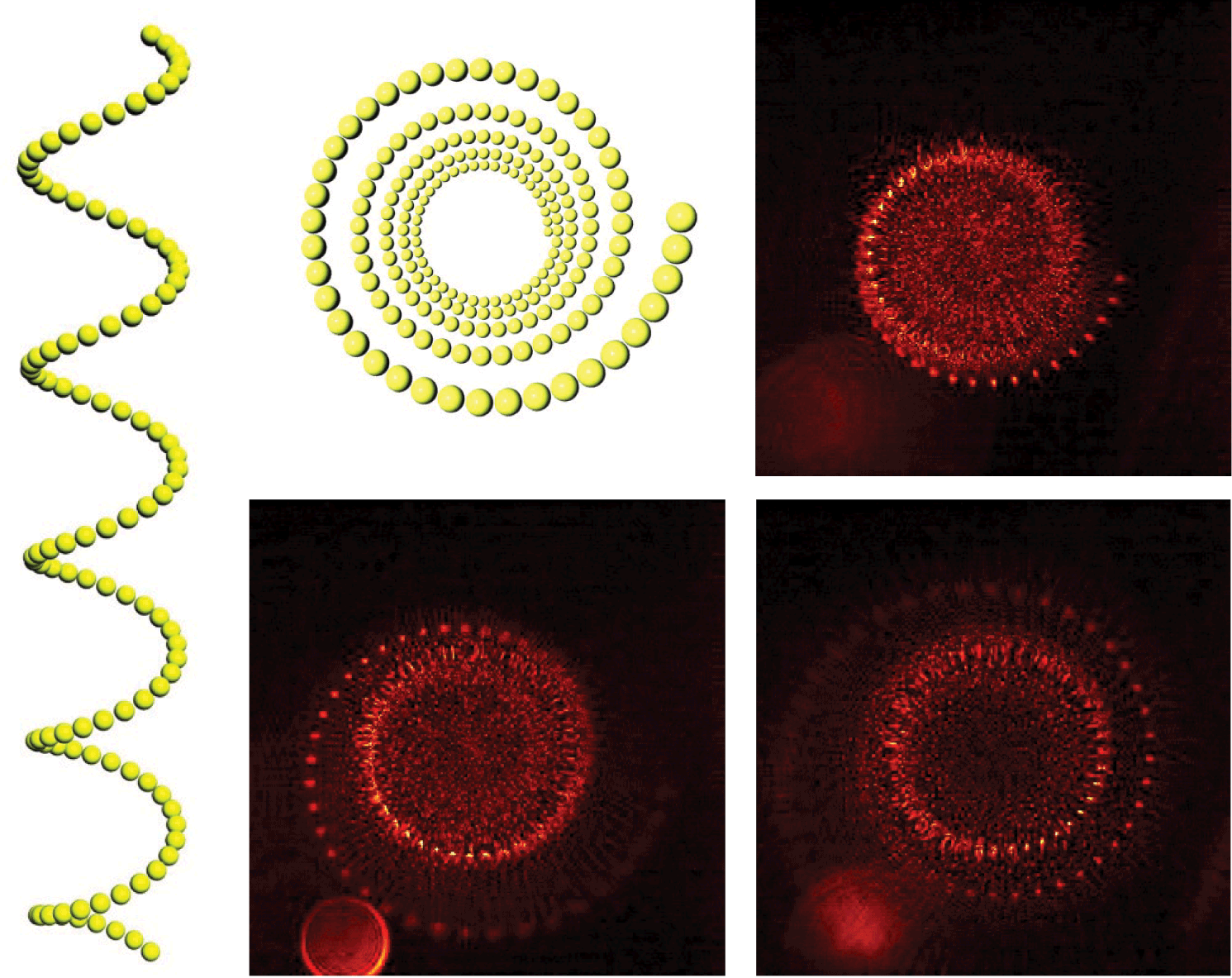
Prof. Dr Thomas Zentgraf, head of the ‘Ultrafast Nanophotonics’ research group in the Department of Physics at Paderborn University, has, together with Prof. Dr Shuang Zhang from the University of Birmingham, succeeded in producing holograms for the first time using a completely new technique. For his holograms, he uses a novel metamaterial that is extremely thin, measuring just 30 nanometres (nm), or 0.00003 mm. By way of comparison, a human hair is about 2,000 times thicker. The required structures are calculated using computer-aided methods and produced using modern nanotechnology techniques. “The advantage of our method is that we can produce 3D holograms in HD quality with a wide field of view, whilst avoiding the formation of ghost images, which is typical of many holograms,” says Thomas Zentgraf.
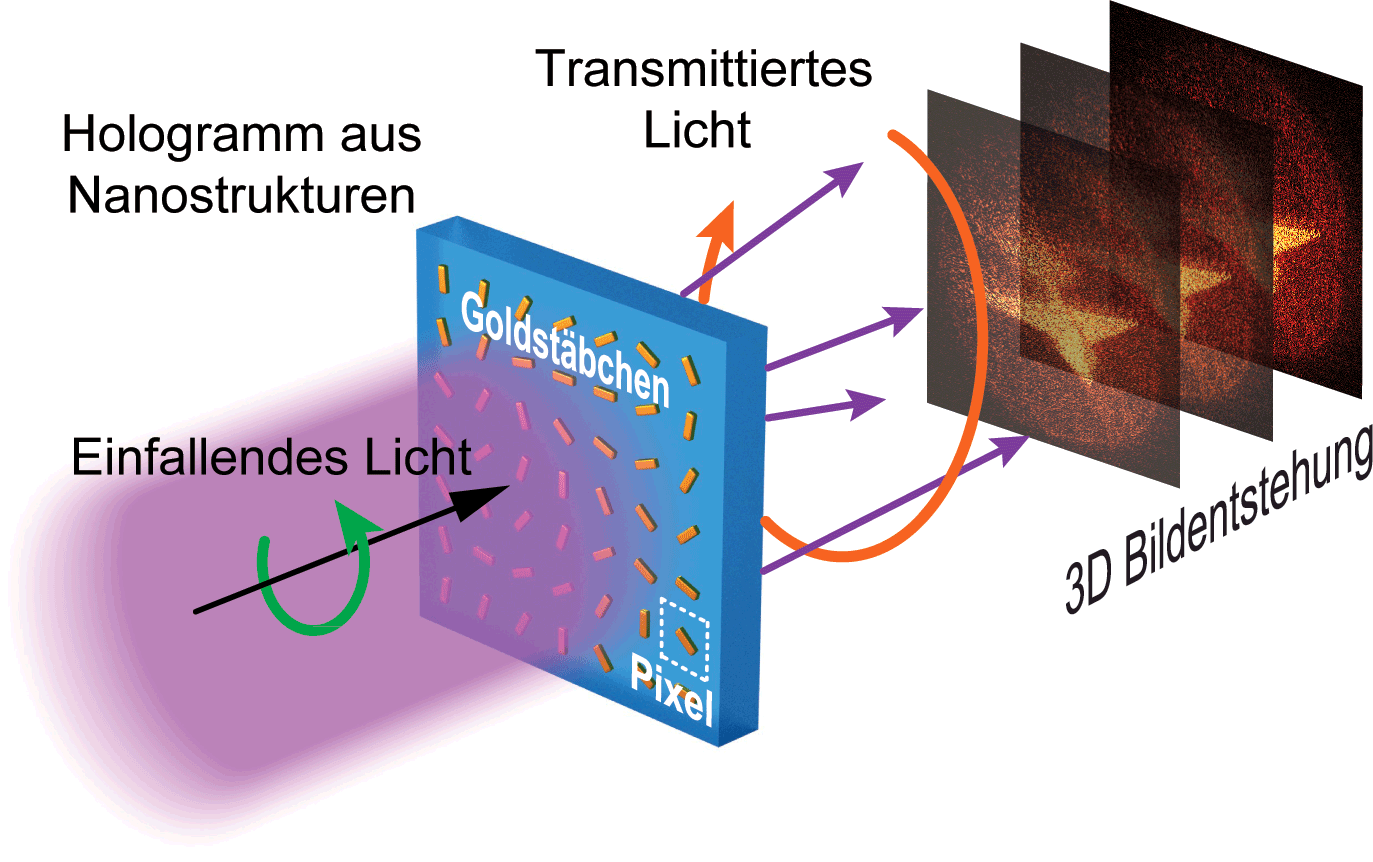
Computer-generated holograms can be produced quickly and precisely. “The computer calculates how the light should appear as it passes through the photographic plate – the actual hologram – and translates this information into the arrangement and length of tiny gold rods on the glass substrate,” explains Holger Mühlenbernd, a doctoral candidate in Thomas Zentgraf’s research group. During production, gold rods 100 to 200 nm long and 30 nm high are created on a glass substrate using state-of-the-art electron beam lithography. Depending on how these rods are aligned and how long they are, they influence the incident light in different ways locally on the surface of the glass substrate, much like small radio aerials.
As the light passes through the surface, the light wave is delayed by the gold rods, just as if the light wave had travelled a longer distance. The orientation of the rods relative to the incident light wave determines the delay time. The length of the gold rods could also be used to control the intensity information – that is, how strongly the light oscillates at that point. When light strikes this hologram, this interaction causes it to generate a three-dimensional image in space that can be viewed directly.
“The use of this metamaterial in holography could lead to a minor revolution,” says Thomas Zentgraf: “Because what is currently being tested on a millimetre scale could, in future, be scaled up to larger formats and eliminate many of the drawbacks of Dennis Gábor’s classical holography.”
The original publication can be viewed via the following link:
www.nature.com/ncomms/2013/131115/ncomms3808/full/ncomms3808.html