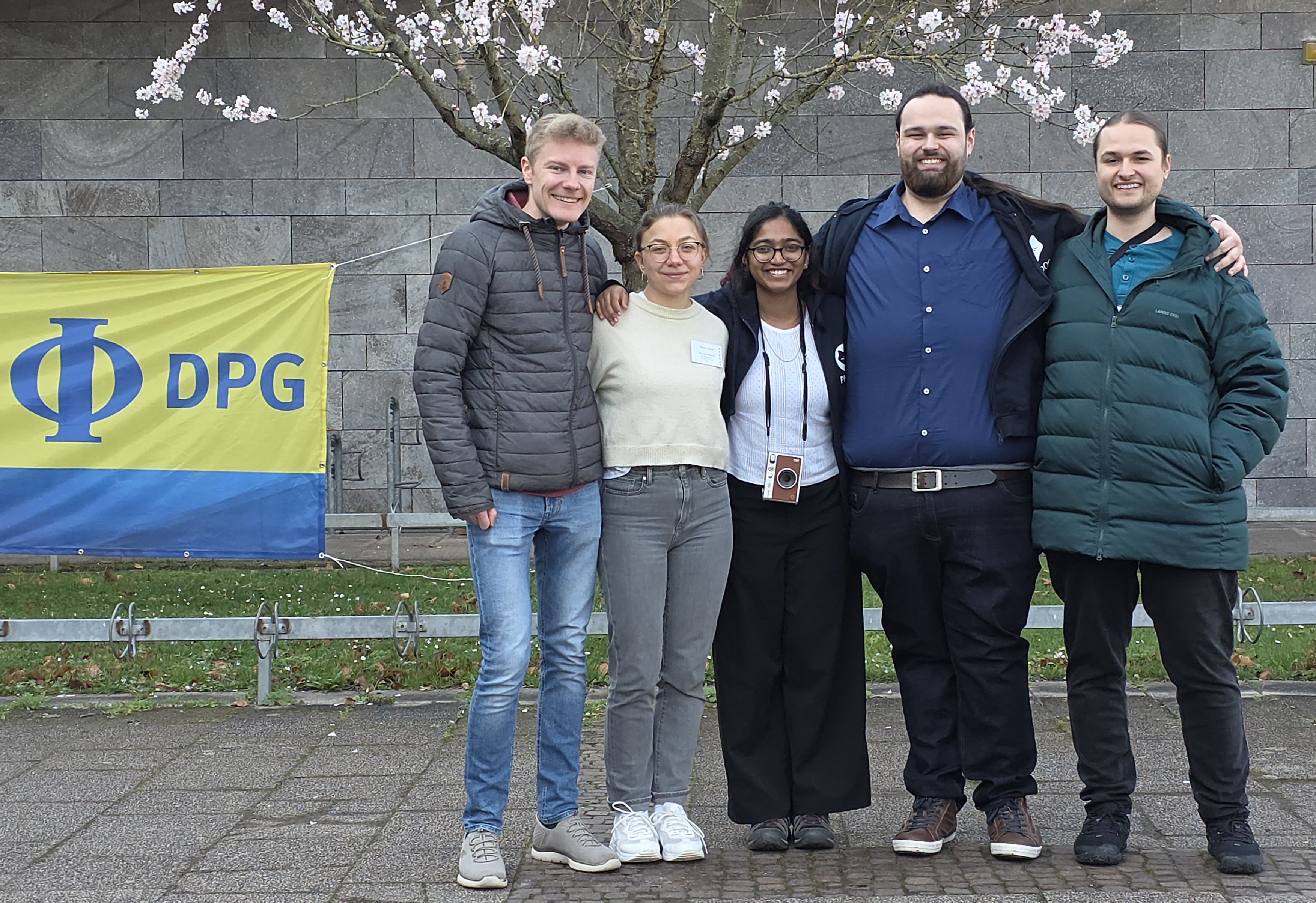
Six scientists from the Integrated Quantum Optics working group led by Christine Silberhorn at Paderborn University attended the Spring Conference 2026 of the German Physical Society (DPG) of the Atoms, Molecules, Quantum Optics and Photonics Section (SAMOP) from 2 March to 6 March 2026. The six scientists include Laura Serino, Micha Jonas, Theresa Keuter, Nivedita Vishnukumar as well as Jonas and Tobias Babai-Hemati.
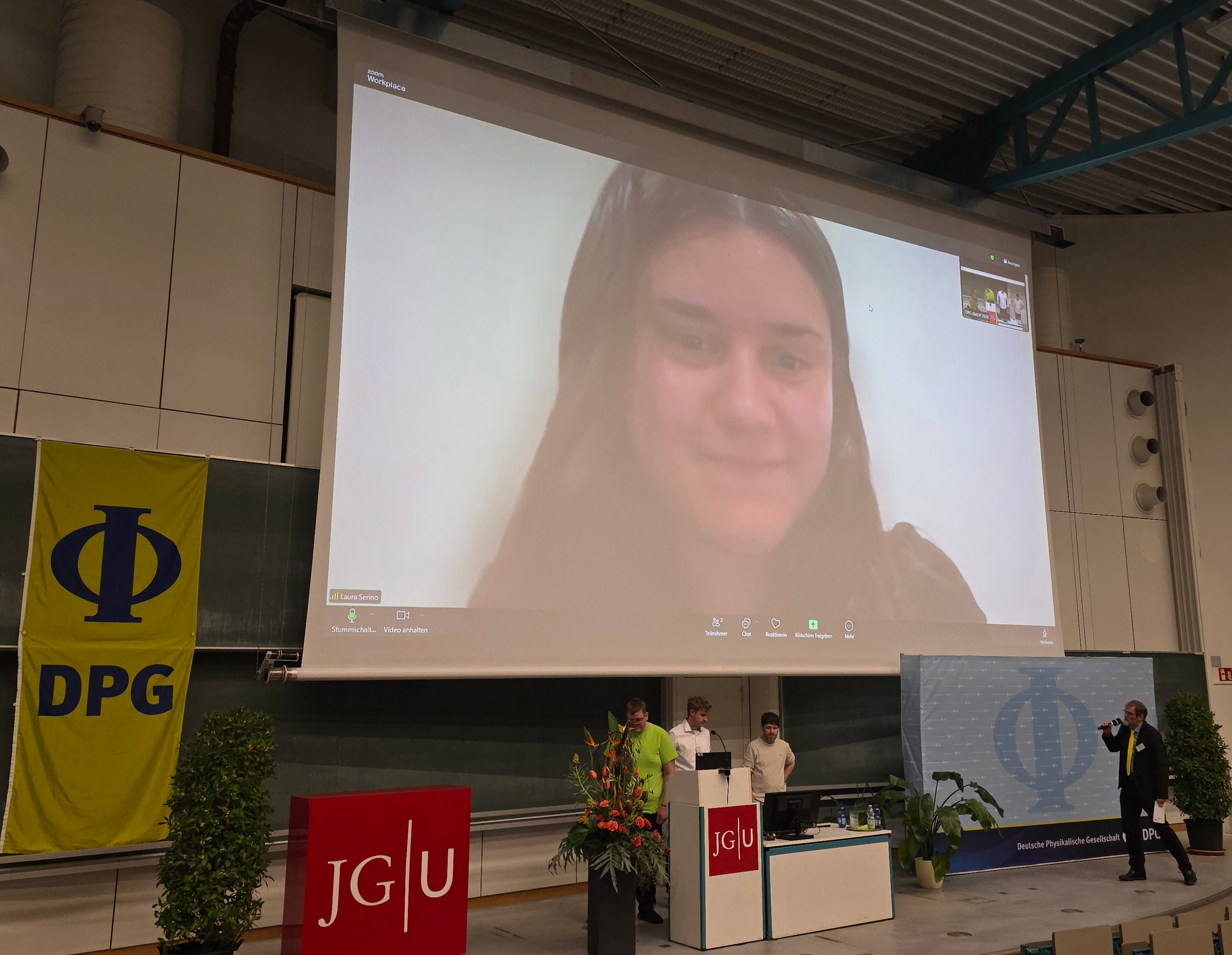
Unfortunately, Laura Serino was unable to attend the conference physically due to the war in the Middle East, but only digitally.
Every year, the DPG Spring Conference brings together several thousand researchers from the fields of atoms, molecules, quantum optics and photonics and is one of the largest physics conferences in the world. It offers young scientists in particular an important platform to present new research results and establish international contacts in research and industry. Based on plenary lectures in the morning, numerous parallel lectures by young scientists throughout the day and poster presentations in the evening, the conference offers a very personalised experience of science and scientific exchange.
Laura Serino was particularly honoured to be nominated for the best doctoral dissertation in the SAMOP sections. With her outstanding thesis on "Harnessing time-frequency qudits using integrated nonlinear processes", Laura Serino secured a place in the final for the award of this prestigious prize. A nomination for this prize alone is considered an extraordinary scientific honour internationally. In her lecture on Monday (02.03.2026), she vividly presented a scalable experimental platform that makes it possible to flexibly generate, manipulate and precisely measure high-dimensional time-frequency quantum states, and was rewarded with thunderous
applause from the audience.
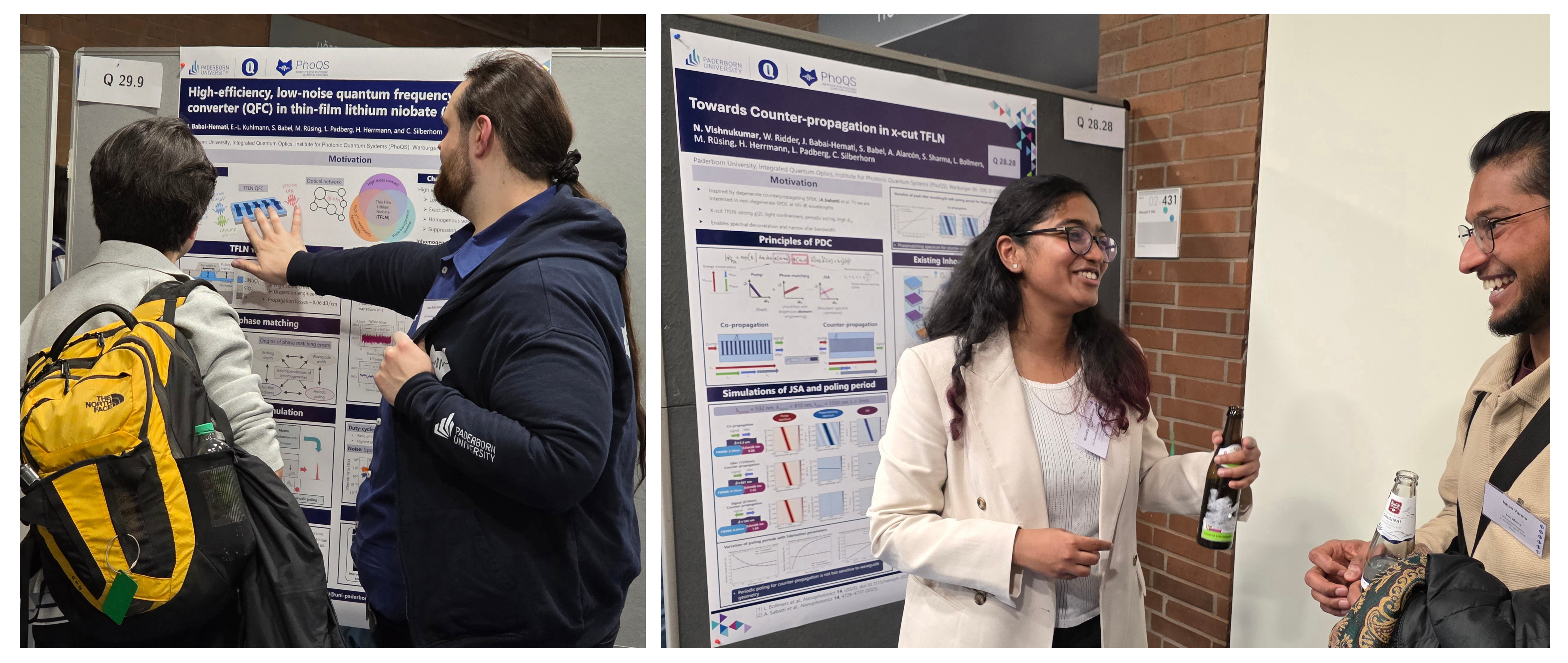
On Tuesday (03.03.2026), Nivedita Vishnukumar and Jonas Babai-Hemati presented their latest research results with their posters entitled "Towards counterpropagating frequency converters in x-cut TFLN" and "Towards low noise and high efficient quantum frequency converters in TFLN", respectively. The two young scientists shared their findings in the field of photon generation and frequency conversion on the thin-film lithium niobate platform (TFLN platform). New approaches and ideas were explored in numerous discussions.
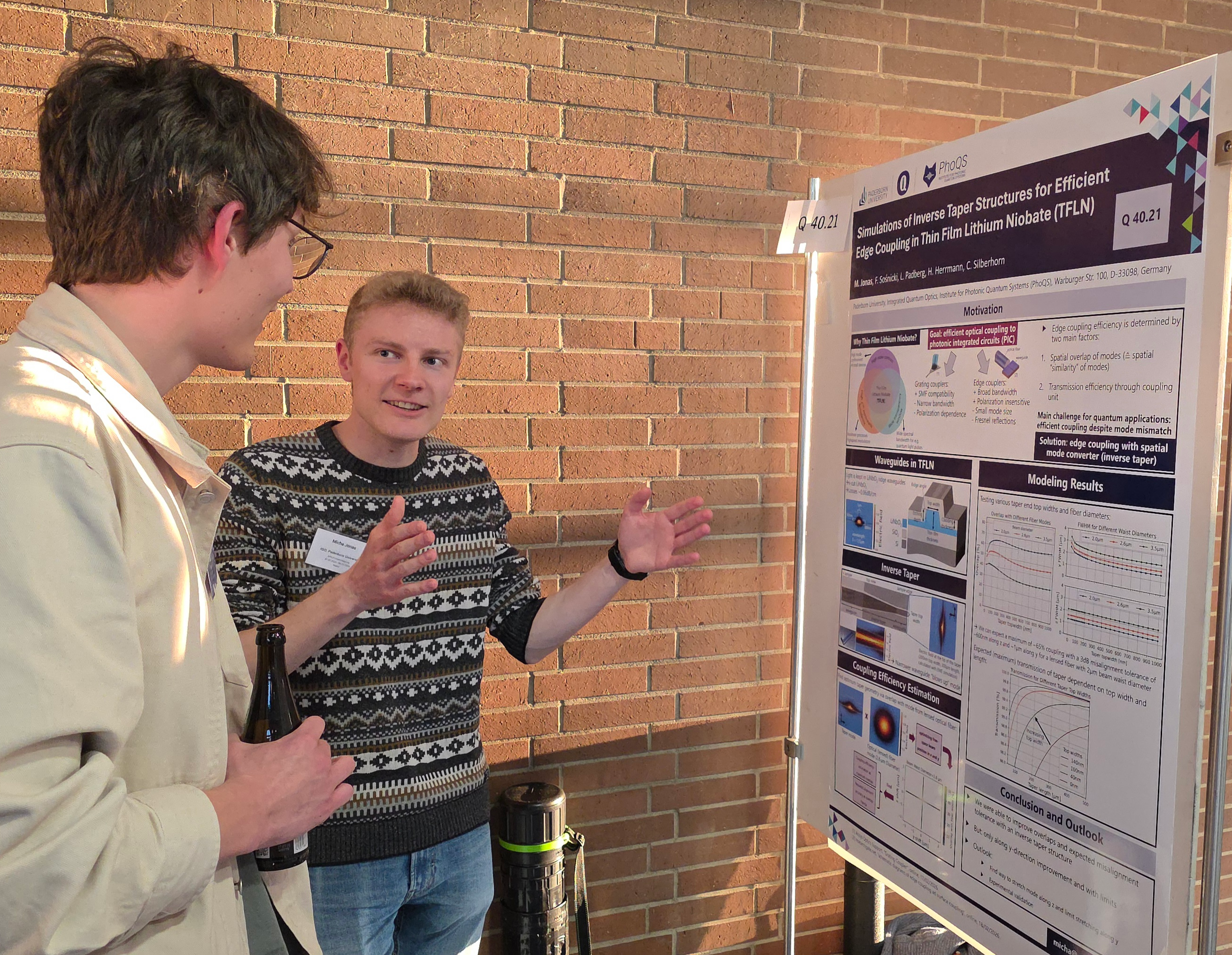
On Wednesday (04.03.2026) it was Micha Jonas' turn to share his poster with the scientific public. Based on precise explanations of his simulated progress in waveguide coupling on the TFLN platform under the title "Simulations of inverse taper structures for efficient edge coupling in TFLN", he also had numerous discussions with other researchers.
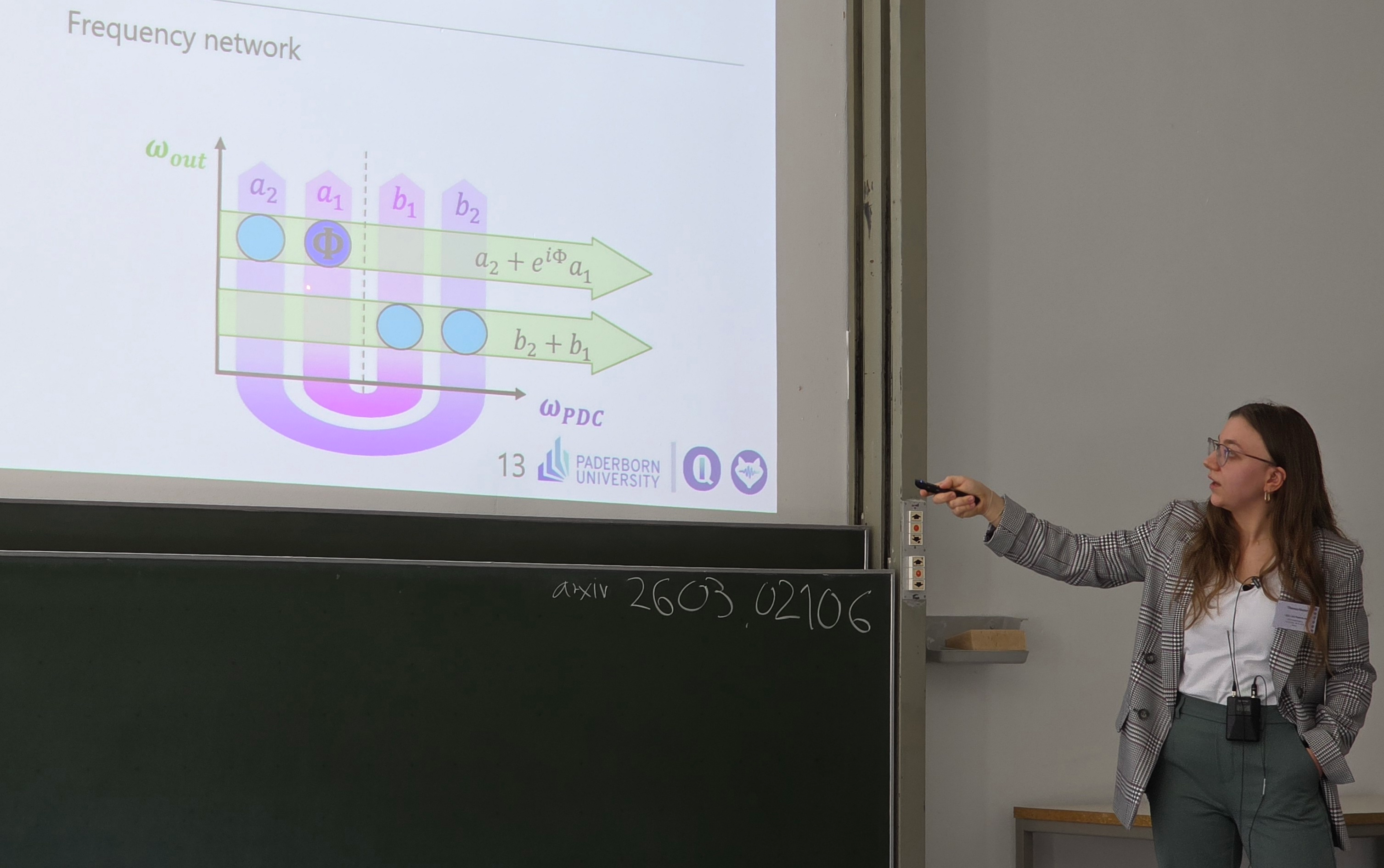
On Thursday (05.03.2026), Theresa Keuter presented her research results on "Non classicality in frequency multiplexed quantum networks". With a confident charisma and an easy-to-follow presentation style, she succeeded in conveying her expert knowledge on novel frequency-encoded quantum networks and their non-classical properties to a broad scientific audience in an understandable way.
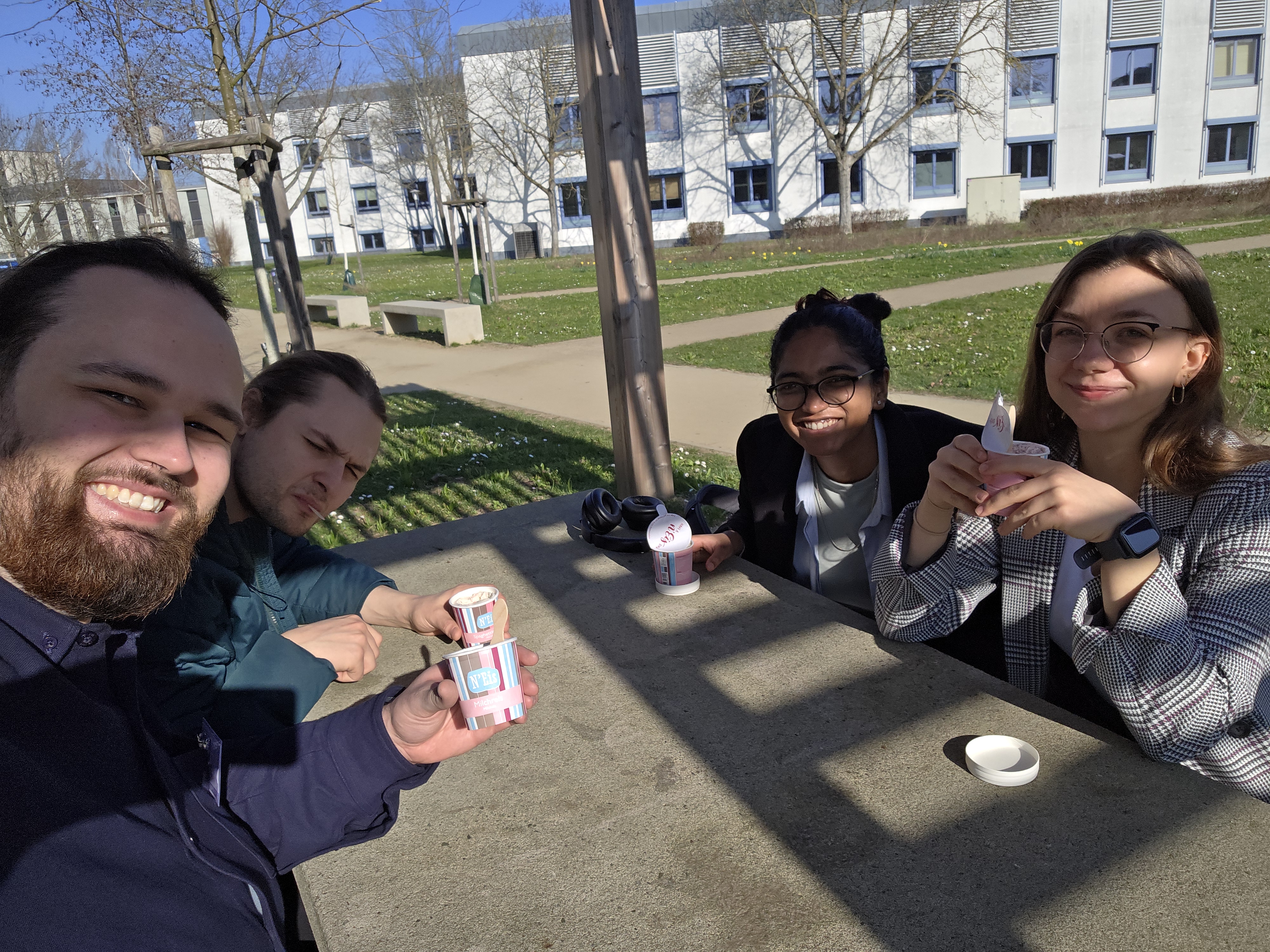
After the successful presentation of all of our scientists' contributions, there was time to cool down at lunchtime with milk ice cream of various flavours, from rice pudding to spaghetti ice cream, in view of the continuing fantastic weather.
In addition to scientific activities, an excursion to St. Martin's Cathedral in Mainz was also part of our scientists' programme. The imposing sight of the building, including its works of art created with infinite effort, inspired deep awe and allowed us to correct our image of our own being in the world.