UPB Bildmarke
Department of Physics
Contact
  • Deutsch
  • English
    • Open Page "Studies"
      • Open Page "Study program"
      • Study program A-Z
      • Physics (Bachelor of Science)
      • Materialwissenschaften (B.sc.)
      • Physics (Master of Science)
      • Optoelectronics & Photonics (M.sc.)
      • Materials Science (M.sc.)
      • Physics Education
      • Minor in Physics
      • Doctoral studies
      • Open Page "Formalities"
      • Application and enrollment
      • Dates and deadlines
      • Examination regulations
      • Entry requirements
      • Transition Bachelor Master
      • Registration Master thesis
      • Changing university or course
      • Open Page "Study organization"
      • Preparatory course in Physics
      • Course catalogue
      • PAUL
      • University library
      • Language courses
      • Semester abroad
      • Open Page "Teaching"
      • Semester dates
      • Physics lab courses for beginners
      • Physics lab courses for advanced students
      • Event-Physik
      • List of demonstration experiments
      • Open Page "Prospective students"
      • Overview
      • PaderPhy Podcast
      • Laboratory visits
      • Physics summer camp
      • Young students
      • Open Page "Advice and support"
      • Physiktreff
      • Sachunterrichtstreff
      • Student representative committee
      • Academic advice service
      • Psychosocial counselling service
      • Examinations committee
      • Examination office Faculty of Science
      • PAUL coordinator
      • Open Page "Jobs and financing"
      • Scholarships
      • BAFöG
      • Student loans
      • Jobs in Physics
      • Forms: SHK contract
      • Jobs in Paderborn
      • Open Page "Campus and life"
      • Physics colloquium
      • Event-Physik
      • AStA summer festival
      • Living in Paderborn
    • Open Page "Research"
      • Open Page "Research interests"
      • Research profile
      • Collaborative research center TRR 142
      • CeOPP
      • PhoQS
      • Selected major projects
      • Overview of the research groups
      • Open Page "Junior academics"
      • PhD studies in Physics
      • Jobs
      • Equal opportunities policies
      • PhD studies committee
      • PhD degree regulations
      • Recommendations for good scientific practice
      • Alumni network Physics
      • Open Page "Events"
      • Physics colloquium
      • SFB colloquium
    • Open Page "Department"
      • Open Page "About the Department"
      • Profile
      • News
      • Job vacancies
      • Regulations
      • How to get here / campus map
      • Open Page "Organization"
      • Management of the Department
      • Board
      • Öffentlichkeitsarbeit
      • Examinations committee
      • PhD studies committee
      • Quality improvement committee
      • Security officers
      • Security officers
      • Other officers
      • Overarching committees
      • Alumni network Physics
      • Open Page "Facilities"
      • Electronics workshop
      • High-precision mechanical workshop
      • Cryogenic supply
      • Lecture course descriptions
    • Open Page "Research groups"
      • Open Page "Experimental Physics"
      • Prof. Dr. Donat As
      • Prof. Dr. Tim Bartley
      • J.-Prof. Dr. Nicholas Güsken
      • Prof. Dr. Klaus Jöns
      • Prof. Dr. Jörg Lindner
      • Prof. Dr. Cedrik Meier
      • Prof. Dr. Dirk Reuter
      • Prof. Dr. Christine Silberhorn
      • Prof. Dr. Thomas Zentgraf
      • Open Page "Theoretical Physics"
      • apl. Prof. Dr. Uwe Gerstmann
      • Dr. Xuekai Ma
      • Prof. Dr. Torsten Meier
      • Prof. Dr. Jörg Neugebauer
      • Prof. Dr. Arno Schindlmayr
      • Prof. Dr. Wolf Gero Schmidt
      • Prof. Dr. Stefan Schumacher
      • J.-Prof. Dr. Polina Sharapova
      • Prof. Dr. Jan Sperling
      • Open Page "Physics Education"
      • Prof. Dr. Eva Blumberg
      • Prof. Dr. Josef Riese
      • Prof. Dr. Claudia Tenberge
Important Links
  • Home
  • For Students
  • International Students
  • Physics lab courses 3P
  • Jobs
  • Contact
Results published in Nature Communications
Contact
  1. Faculty of Science
  2. Department of Physics
  3. News
Back to the news list

Sci­ent­ists first to achieve Wan­ni­er-Stark loc­al­iz­a­tion in poly­crys­tals

29.09.2021  |  Research,  Computational Optoelectronics and Photonics

A contribution from Pressemitteilung

Share post on:

  • Share on Instagram
  • Teilen auf Twitter
  • Teilen auf Facebook
  • Teilen auf Xing
  • Teilen auf LinkedIn
  • Teilen über E-Mail
  • Link kopieren

Results published in Nature Communications

Scientists from Paderborn University, the Max Planck Institute for Polymer Research and the University of Konstanz have succeeded in achieving a rare quantum state. They are the first to have demonstrated Wannier-Stark localization in a polycrystalline substance. Predicted around 80 years ago, the effect has only recently been proven - in a monocrystal. Until now, researchers assumed this localization to be possible only in such monocrystalline substances which are very complicated to produce. The new findings represent a breakthrough in the field of physics and could in future give rise to new optical modulators, for example, that can be used in information technologies based on light, among other things. The physicists have published their findings in the well-respected technical journal, Nature Communications.

Stronger and faster than lightning

The atoms of a crystal are arranged in a three-dimensional grid, held together by chemical bonds. These bonds can, however, be dissolved by very strong electric fields which displace atoms, even going so far as to introduce so much energy into the crystal that it is destroyed. This is what happens when lightning strikes and materials liquefy, vaporize or combust, for example. To demonstrate Wannier-Stark localization, the scientists’ experiments involved setting up electric fields of several million volts per centimetre, much stronger than the fields involved in lightning strikes. During this process, the electronic system of a solid - in this case, a polycrystal - is forced far from a state of equilibrium for a very short time. “Wannier-Stark localization involves virtually shutting down some of the chemical bonds temporarily. This state can only be maintained for less than a picosecond - one millionth of one millionth of a second - without destroying the substance. Once the electric field inside the crystal is strong enough, the chemical bonds towards the field are deactivated, rendering the crystal briefly as a system of unbonded layers. Chaos reigns. The phenomenon correlates with drastic changes to the electronic structure of the crystal, resulting in stark changes to optical characteristics, in particular, high optical nonlinearity,” explains Paderborn University’s Professor Torsten Meier, who was responsible for the theoretical analysis of the experiments. Nonlinear effects can give rise to new frequencies, for example, without which the targeted manipulation of light needed for modern telecommunications would not be possible.

The move from monocrystalline to polycrystalline

The effect was first demonstrated three years ago using intense terahertz radiation in a particular crystalline structure, involving the precise arrangement of the atomic structure, in a gallium arsenide crystal. “This precise arrangement was necessary for us to be able to observe field-induced localization,” explains Meier, who simulated and described the experiments carried out at the University of Konstanz in 2018. Now the physicists have gone one step further. “We wanted to investigate whether polycrystalline perovskite, commonly used in solar cells and LEDs, can also be used as an optical modulator,” says Heejae Kim, team leader at the Max Planck Institute for Polymer Research. Optical modulators target the characteristics of light to make it usable in additional ways. Among other things, they are used in telecommunications, LCDs, diode lasers and materials processing. However, until now their manufacture has been not only costly, but also almost solely restricted to the field of monocrystals. Polycrystals such as perovskite could change that, being used as affordable modulators with a broad range of applications in future.

Simulations prove conjecture

“In spite of the random orientation of the individual crystallites, the small building blocks within the polycrystal, we were able to observe clear results that correspond to those characteristic of Wannier-Stark localization,” continues Kim. The simulations carried out in Paderborn later confirmed these findings. Meier explains, “Although the sample is polycrystalline, it appears that the field-induced changes in the optical characteristics are dominated by a particular orientation between the crystallites and the electric field.”

Over and above the first realization of Wannier-Stark localization in a polycrystalline substance, there is one thing that is particularly worthy of note: The intensity of the field required to observe the effect is considerably lower than in the monocrystalline gallium arsenide. According to Kim, “This is a result of the atomic structure of perovskite, that is, of the coincidence of a high lattice constant - the distance between the atoms - and a narrow spectrum in a particular crystal orientation. The researchers’ future plans involve investigating more fully this extreme state of matter at the atomic level, researching additional substances and examining further applications of the effect.

Find the article in Nature Communications here: doi.org/10.1038/s41467-021-26021-4


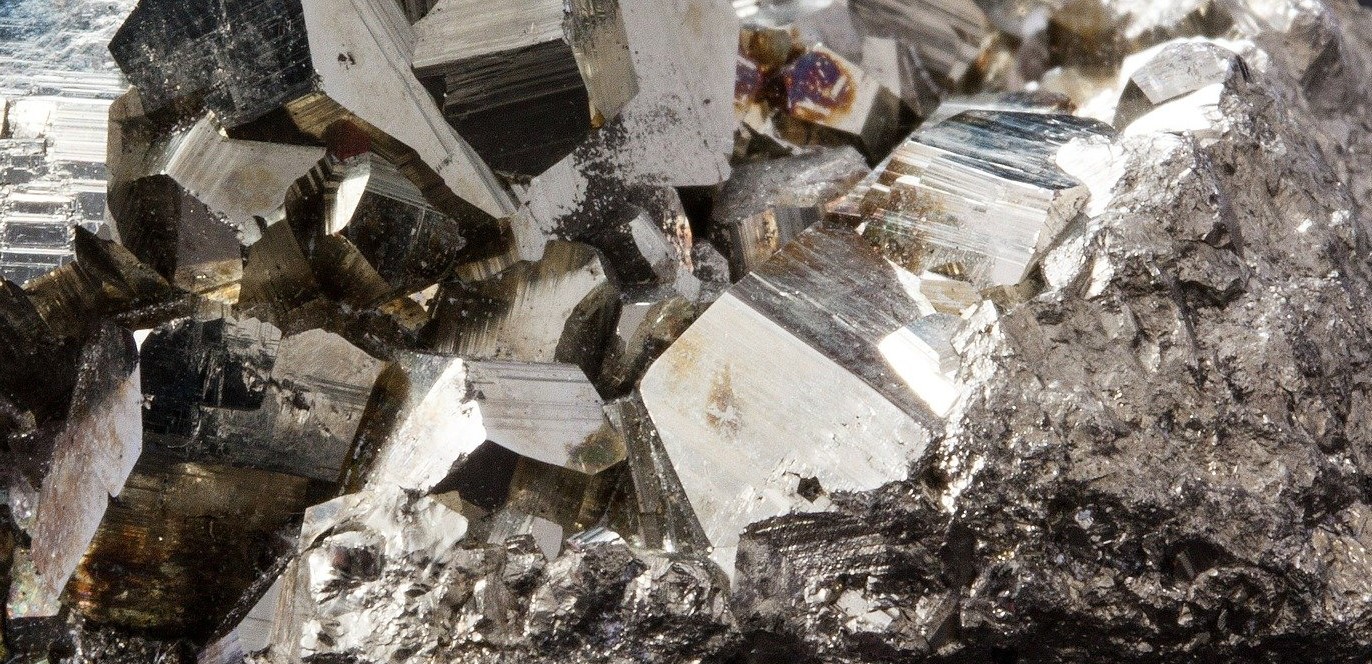
image (Pixabay, Pixabay Lizenz, stux).
Download (434 KB)

Contact

business-card image

Prof. Dr. Torsten Meier

Computational Optoelectronics and Photonics

Write email +49 5251 60-2336
More about the person

Department of Physics

Warburger Str. 100
33098 Paderborn
Germany

Phone:

(0)5251 60 2679

E-Mail:

physik@upb.de
Quick links
  • Summer camp
Universität Paderborn

Warburger Str. 100
33098 Paderborn
Germany

Phone University

+49 5251 60-0
Legal notice
  • Imprint
  • Data privacy
  • Whistleblower system
Social networks